Hardik Pandya’s girlfriend Mahieka Sharma shields son Agastya from paparazzi, says ‘Disturb ho raha hai’
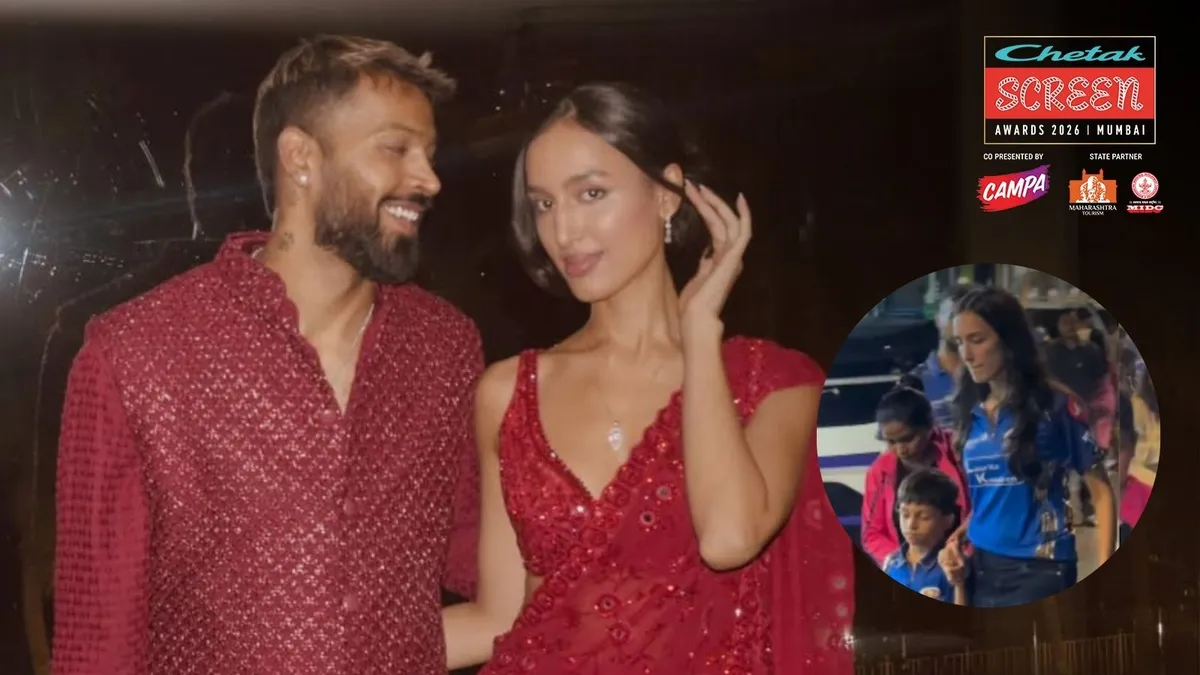
Hardik Pandya’s Partner Mahieka Sharma Takes a Stand: ‘Disturb Ho Raha Hai’
The relentless glare of the paparazzi is a constant in the lives of public figures, but when that spotlight extends, uninvited, to their children, lines are often crossed. Such was the case recently when Mahieka Sharma, partner of cricket star Hardik Pandya, was caught in a familiar media scrum. Her plea, simple yet firm: “Disturb ho raha hai” (He is getting disturbed), as she shielded her son, Agastya, from the intrusive camera flashes. This isn’t just a fleeting incident; it’s a microcosm of a much larger, deeply entrenched issue in celebrity journalism.
Sharma was seen navigating through a throng of photographers, clearly uncomfortable with the intensity of the attention directed at young Agastya. Her immediate instinct was protective, a mother’s natural response to shield her child from perceived overwhelming stimuli. This wasn’t a staged appearance; it was a candid moment of a family attempting to simply exist in public without being turned into a commodity. While the media often justifies its presence citing public interest, the ethical boundaries surrounding minors remain a fiercely debated, and often ignored, territory.
The Big Picture: Privacy, Paparazzi, and Public Persona
The spectacle of celebrity often overshadows the individual. For decades, the public’s insatiable appetite for glimpses into the lives of stars has fueled a multi-million-dollar paparazzi industry. This isn’t unique to India, of course; the Princess Diana tragedy serves as a grim global reminder of the worst outcomes of such unchecked pursuit. But in the age of instant gratification and social media virality, the pressure on photographers to capture “the shot” has only intensified. Every outing becomes a potential headline, every child a potential trending topic.
What Hardik Pandya’s partner Mahieka Sharma’s firm stance underscores is a growing pushback from celebrities themselves. There’s a clear delineation between a public persona crafted for film promotions or official events – like the carefully orchestrated appearances for a blockbuster like Dhurandhar 2, which shattered box office records – and the private moments of a child. The former is a professional engagement; the latter is an invasion. The argument that “they signed up for this” falls flat when innocent children, who made no such choice, become collateral damage. Even established actors like Ranveer Singh, accustomed to immense public scrutiny, often try to navigate spaces with their families with a measure of privacy, sometimes gently requesting space. The fact that such requests are frequently ignored highlights a systemic issue within the media landscape.
This incident isn’t just about Mahieka Sharma and Agastya; it’s a symptom of a larger ethical void. When does “news” become harassment? When do the rights of a minor to a normal upbringing supersede the perceived “right” of the public to every candid detail? Industry analysts are increasingly questioning the long-term sustainability and moral compass of media outlets that profit from such invasive practices. Perhaps it’s time for more stringent self-regulation, or even legal precedents, to protect children from being unwitting participants in the celebrity circus. Because ultimately, “disturb ho raha hai” isn’t just a mother’s complaint; it’s a clear signal that a line has been crossed, and that line impacts the very future of how we define celebrity, privacy, and responsible journalism.
Leave a Comment